
Blog

  • When the Payroll Hit the Floor: A Practical Cash Flow Playbook for Advisors

    When the Payroll Hit the Floor: A Practical Cash Flow Playbook for Advisors

    When the Payroll Hit the Floor: A Practical Cash Flow Playbook for Advisors

    Three years ago I sat in a cramped back office while a client stared at their bank balance and said, “We can’t cover payroll on Friday.” They ran a profitable seasonal business, had solid margins, and still the cash disappeared faster than revenue came in. That moment forced a rewrite of how I advise clients on short-term liquidity and long-term resilience.

    This article walks through the lesson I learned, step by step. It focuses on practical actions accountants, bookkeepers, and client advisory providers can use to prevent the payroll shock that wrecks trust and destabilizes a business. The primary concern here is cash flow, not profit. Treating them as separate problems changes decisions.

    Diagnose quickly: three questions that separate noise from threat

    When a client says they’re tight, don’t start with spreadsheets. Start with questions that reveal timing and leverage.

    First, what exact date does money need to be available? Most owners talk in weeks when their problem is days. Move the conversation to a calendar day and work backward.

    Second, what receipts are firm in the next 30 days? Identify confirmed invoices, scheduled payments from large customers, and any receivables that will not realistically arrive. You need a short list of cash you can count on.

    Third, what expenses are fixed and non-negotiable this period? Payroll, loan payments, rent, and supplier holdbacks sit in a different category than discretionary spend. Separating those removes the fog.

    Answering these three questions produces a cash runway number. That number tells you whether the client needs temporary fixes or structural change.

    Tactical moves that buy time without breaking the business

    If the runway is under two pay cycles, focus on time and certainty.

    Negotiate payment terms with a vendor. I once asked a supplier for a seven-day extension to move a large materials invoice after explaining the timing mismatch. They agreed because the business had a history of steady payments. Those conversations are easier when an advisor coaches the owner on the exact ask and the proposed date.

    Convert open invoices into certain cash. Offer a modest early-pay discount to large customers who can pay in 7 to 14 days. Small discounts often cost less than a bounced payroll.

    Use payroll structuring. Swap one full payday for a split payroll in the immediate window. For essential staff, push the second half of a paycheck by a few days while covering that gap with a short-term loan or owner draw. That preserves morale and gives time to execute other fixes.

    These moves are not elegant. They are deliberate, temporary, and designed to preserve operations while you implement longer-term solutions.

    Build systems to make the crisis avoidable next time

    After the immediate risk is contained, convert ad hoc fixes into predictable systems.

    Start with a rolling 13-week cash forecast. It is not complex. Project cash receipts and disbursements weekly and update it every week. The value lies in regular cadence. When I trained a small chain of service businesses to update the forecast each Monday, they avoided two near-misses the following year.

    Create a priority schedule for cash. Rank obligations by consequence. Payroll and secured debt sit at the top. Discretionary subscriptions and nonessential purchases sit at the bottom. A clear priority schedule frames decisions when cash is thin.

    Establish a “buffer account.” Even a modest buffer—one month of fixed payroll costs—changes behavior. It forces owners to treat cash as an operating asset, not a leftover after expenses.

    These systems reduce surprises and make advisory conversations actionable instead of hypothetical.

    Redesign pricing and collections to reflect real working capital

    Many businesses underprice because they ignore the cost of time. Late payments and long receivable cycles have a real cost that shows up as cash flow friction.

    Shift terms for new customers. Price new engagements to include the cost of carrying receivables. Offer clear incentives for on-time payments and firm penalties for chronic late payers. When owners see the true carrying cost, they accept slightly higher prices that stabilize cash.

    Segment customers by payment behavior. For repeat late payers, require partial upfront payments or shorter terms. For reliable payers, offer stable terms that reward the relationship. This reduces unpredictability and increases cash velocity.

    Midway through a turnaround I advised, switching to 30-day net for a segment of customers produced a visible weekly inflow that eliminated the need for factoring.

    The human side: leadership that keeps teams steady

    Money problems test trust. How leaders communicate during a cash shortage determines whether the team rallies or fractures.

    Be transparent on the schedule, not on the panic. Tell staff there is a known timeline for payroll and exactly what the plan is to meet it. Concrete dates and steps restore confidence.

    Model priorities consistently. If you tell suppliers you will pay payroll first and then issue vendor checks, make good on that promise. Broken promises compound anxiety.

    If you want a short reference on leading through financial stress, review practical approaches to leadership. Clear leadership keeps teams focused on solutions instead of fears.

    Final insight: cash flow is a rhythm you can coach

    The true skill of an advisor is turning emergency moves into repeatable habits. When you teach owners to run a weekly forecast, prioritize cash, and align pricing with working capital, you do more than save a payroll. You shift the business from reactive survival to predictable operation.

    One small structural change often makes the difference. In one case a client restructured invoicing cadence and unlocked a predictable mid-month cash inflow. That single change eliminated three crises a year. If you want practical tools for converting receivables into steadier operating capital, resources on improving cash flow contain techniques I have seen work in the field.

    Advisors who focus on timing over headline profitability deliver real value. Profit tells a story about performance. Cash flow tells a story about survival. Teach the latter first, and the former follows.

  • How a Three-Question Weekly Check Stopped a Seasonal Cash Flow Crisis

    How a Three-Question Weekly Check Stopped a Seasonal Cash Flow Crisis

    How a Three-Question Weekly Check Stopped a Seasonal Cash Flow Crisis

    I learned the hard way that cash flow can look healthy on paper and collapse inside a week. The summer before last my client, a regional services business, lost two large customers in ten days. Their bank balance still read fine, but payroll was due in five days and invoicing lagged. We rebuilt confidence and avoided missed payroll by changing one simple habit: a three-question weekly check that focuses attention on real cash, not just accounting balances.

    This article explains the three questions, how to put them into practice with your clients, and the simple operational changes that make answers reliable. Use this with advisory clients, bookkeeping engagements, or coaching conversations to turn reactive cash firefighting into predictable planning.

    The problem: financial statements mask timing risk

    Bookkeepers and accountants produce accurate reports. Those reports rarely show when cash actually lands. Reconciling receivables and forecasting collections takes time that many clients do not give it.

    Timing risk becomes visible when a business has a lumpy revenue model, seasonal inflows, or concentrated customers. The common result is a sequence: confident report, surprise shortfall, panic calls to vendors, and rushed short-term borrowing.

    If you want to move clients from reactive to steady, start with a focused weekly ritual that everyone can follow.

    The three-question weekly check that actually works

    Ask these questions aloud every week with the owner or finance lead. Keep answers specific and time-bound.

    1. Who will pay us in the next seven days and for how much?
      Require names, invoice numbers, and expected payment dates. If the answer is “some open receivables,” push for specifics.
    2. What must we pay in the next seven days and when?
      List payroll dates, loan payments, vendor due dates, and tax deadlines. Include amounts and whether the payments are fixed or flexible.
    3. What actions are we taking this week to close the gap?
      Actions should be owner- or staff-assigned, with deadlines. Examples include calling a past-due client, stopping discretionary spending, or accelerating a small invoice with a payment link.

    These questions force three changes. First, you move from balances to real cash events. Second, you create ownership. Third, you commit to actions with dates.

    How to operationalize the check with clients

    Start the week with a ten-minute meeting. Keep the meeting short and procedural. The agenda is the three questions and a single quick review of any planned borrowings.

    Use simple tools. A shared spreadsheet or the notes field in the client portal works. Do not require new software unless the client already wants it. The point is rhythm and clarity, not technology.

    Train the owner and the bookkeeper to prepare a one-line answer to each question before the meeting. Preparation changes the conversation from guessing to decision-making.

    Practical scripts and tactics

    When a payment is uncertain, use direct language: “Tell me when you will pay or we will escalate to a collections email by Thursday.” For receivables, offer two follow-ups: a friendly reminder and a firm escalation message. Bookkeepers can draft both messages before the meeting.

    For payables that can move, negotiate dates proactively. Owners often accept a short delay that avoids a bank fee or short-term loan. Capture agreed dates in writing and review them the next meeting.

    Making numbers reliable: small reconciliations with big impact

    Answers only help if the underlying data is accurate. Implement a minimal weekly reconciliation routine.

    Reconcile bank balance, unapplied cash, and top five receivables. The point is speed and focus. This takes 20–40 minutes for most small businesses if the bookkeeper prioritizes unmatched deposits and the biggest outstanding invoices.

    If the client uses payment portals, ask for a daily summary email to the bookkeeper. If they accept checks, track mailed dates and follow up after five business days. These small practices tighten the gap between what the reports show and what will actually clear the bank.

    How this changes advisory conversations

    Once you run the weekly check for six weeks you can shift the conversation from crisis management to planning. Use the pattern of answers to surface structural fixes: broaden the customer base, diversify payment terms, or redesign pricing seasons.

    When you need to discuss higher-level topics, anchor them in cash evidence from those three questions. For example, instead of saying “you have concentration risk,” show the week when two customers represented 70 percent of inflows and the owner’s plan to reduce that to 40 percent in 12 months.

    At that point your role becomes clear: you help translate operational fixes into predictable liquidity. You can also recommend governance practices that support that work, including board-level review of cash cadence and a rolling 13-week forecast updated from the weekly check.

    Midway through this transformation you may find owners need guidance on people choices and organizational leadership. Directing them to practical resources on leading change helps the new habits stick without turning advisory sessions into hand-holding.

    The ultimate payoff: predictable decisions instead of panic

    The three-question check reduces last-minute borrowing, improves on-time payroll, and creates space for strategic decisions. It reveals not just whether a business has money, but when the money will arrive and who owns the steps to secure it.

    You do not have to fix every structural issue in one meeting. The immediate returns come from predictable weekly clarity. Over three months that clarity compounds into better supplier terms, fewer emergency loans, and measured growth.

    For clients seeking more concrete cash management tactics, a practical compilation of collection tactics and payment acceleration options can help translate weekly answers into cash in the bank. For example, providing client-facing payment links or short-term early-pay discounts often moves cash faster without harming margins. If you want ready-made materials you can adapt, see a curated resource on cash flow for real-world examples and templates.

    The weekly three-question ritual takes discipline. It asks owners and advisors to trade comfortable ambiguity for clear commitments. Do that and you will turn seasonal stress into a repeatable operating rhythm. Your clients will stop being surprised by cash problems. They will start making better decisions because they know when money will actually arrive.

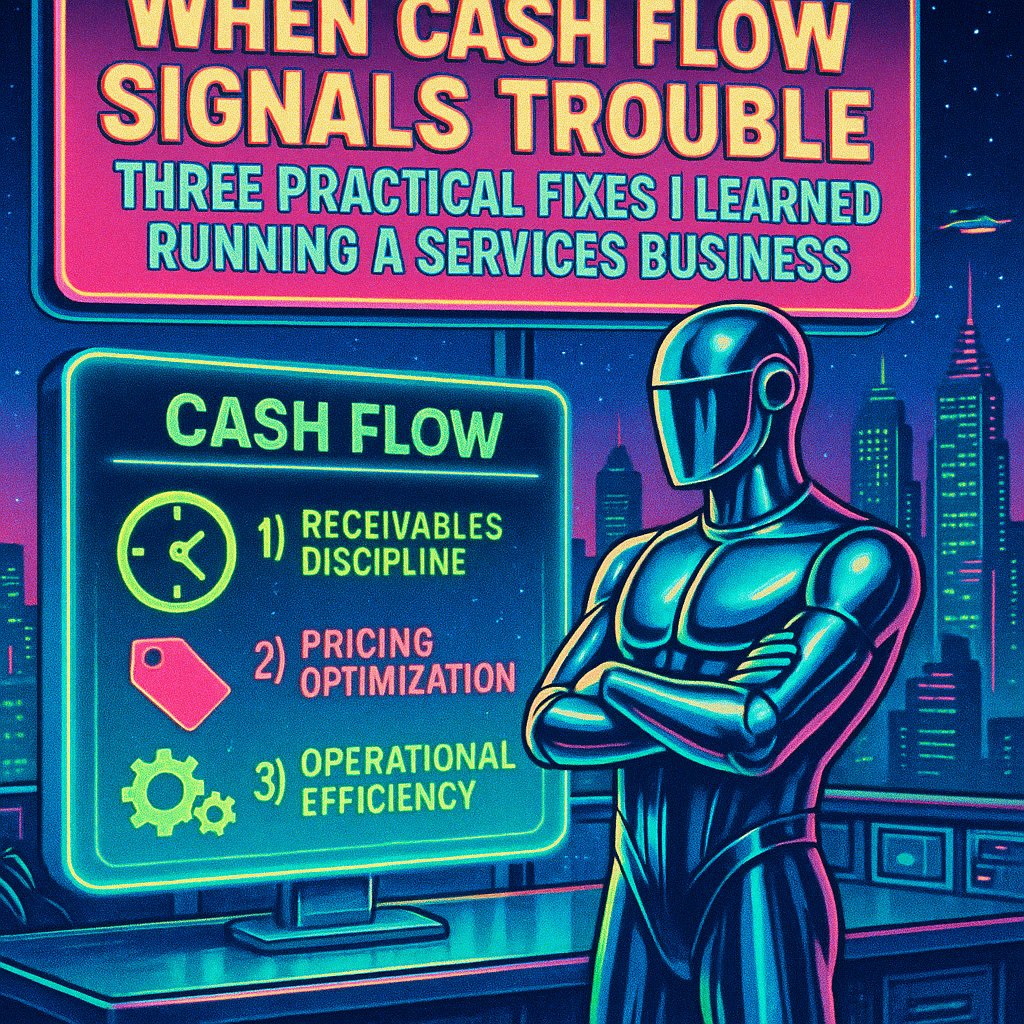
  • When Cash Flow Signals Trouble: Three Practical Fixes I Learned Running a Services Business

    When Cash Flow Signals Trouble: Three Practical Fixes I Learned Running a Services Business

    When Cash Flow Signals Trouble: Three Practical Fixes I Learned Running a Services Business

    The week the phone stopped ringing, cash flow became more than an accounting metric. It became the conversation I had with myself at 2 a.m. and the problem my team woke up to the next morning. If you advise small firms, those quiet weeks are when your clients need structure more than sympathy.

    This article walks through three pragmatic fixes I used to steady a services business when receivables lagged, margins thinned, and confidence wavered. I focus on actions advisors and client services professionals can teach their clients so problems do not become crises.

    Frame the problem: read the cash flow signals early

    Most owners watch revenue and assume steady sales equal steady cash. They forget timing. Cash flow problems rarely arrive out of nowhere. They follow invoice disputes, a big client stretching terms, or a seasonal dip.

    Start by training clients to treat cash flow as a rhythm. Ask them to compare bank balances to aged receivables, payroll dates, and upcoming vendor obligations. A one-week mismatch between expected inflows and payroll can mean a funding shortfall one month later.

    Create a simple three-line view for every client: cash on hand, committed outflows in the next 30 days, and receivables due in the same window. That short snapshot reveals true urgency.

    Fix 1 — Shorten the runway: practical tweaks to accelerate collections

    Acceleration rarely requires new software. It requires small policy shifts that are simple to enforce.

    First, clarify payment terms on every proposal and invoice. Ambiguity allows clients to default to the worst possible behavior. Second, move to milestone billing for multi-step work. When a client signs off on a phase, issue an invoice immediately. Third, build predictable reminders into the process. A polite email at seven days past due, then a phone call at 14 days, resets expectations faster than waiting for 30-day notices.

    When clients resist prepayment, offer immediate-value alternatives. For example, provide a short deliverable or report upon receipt of an initial payment. That transforms payment from a trust gamble into an exchange of value.

    These steps shrink the cash conversion cycle and give owners breathing room to handle other issues.

    Fix 2 — Rebuild margins without cutting core capability

    When cash tightens, the reflex is to cut price or headcount. Both can damage future revenue. Instead, find ways to protect gross margin by reallocating effort.

    Track time on a per-project basis for a month. Identify repetitive tasks that can be standardized into templates or checklists. Standardization reduces billable hours without reducing perceived client value.

    Next, tier services. Create a baseline package that covers essentials and a premium tier for hands-on, high-touch work. Many clients will happily accept a lower-priced baseline for routine needs. That approach preserves cash while keeping higher-margin options available.

    Finally, negotiate payment-linked deliverables with subcontractors. If a subcontractor is paid in part when your client pays, you reduce your cash exposure.

    These operational moves maintain service quality and keep margins healthier than blunt cost cuts.

    Fix 3 — Build predictable liquidity: simple contingency planning

    Every small business needs a practical liquidity plan, not a panic plan. Contingency planning involves knowing two numbers: the minimum cash buffer you need to operate for 30 days, and the sources available if that buffer dips below threshold.

    Encourage clients to list three non-destructive liquidity sources. These can include temporarily deferring discretionary spend, reassigning internal resources, or a short-term invoice financing arrangement. The point is to identify options before pressure mounts.

    For advisors, conversations about liquidity open the door to stronger planning and healthier client relationships. Discuss the behavioral elements too. When owners know their options, they make clearer trade-offs and avoid poor decisions made under stress.

    Mid-course correction: better client conversations that change outcomes

    When I trained account managers, I taught them to move from reporting to coaching. Instead of only delivering aged receivable reports, they asked this question: what will you do if 25% of receivables slip by 30 days? That one question forces a client to prioritize.

    Use concrete scenarios. Run a 30-day stress test with clients: what happens if a major invoice is delayed, or a key client pauses work for 60 days? Work backward to the actions that preserve liquidity.

    If you want frameworks to guide those conversations, resources on operational leadership often contain practical exercises and scripts advisors can adapt. For direct material on improving short-term working capital management, a useful primer on cash flow offers pragmatic techniques and phrasing to use with owners.

    Closing insight: teach owners to see cash flow as a management tool

    The most successful owners treat cash flow like a management dashboard, not a last-minute panic item. The three fixes above accelerate collections, protect margins, and create a predictable liquidity cushion. Each one is simple, repeatable, and teachable by advisors.

    When you help a client convert worry into routine checks and small, enforceable policies, you remove the drama from decisions. That change creates space for better strategy and steadier growth. When cash behaves predictably, owners focus on opportunities, not survival.

    Make cash flow the conversation you have every month. It will keep clients out of emergency mode and make your advisory work far more impactful.