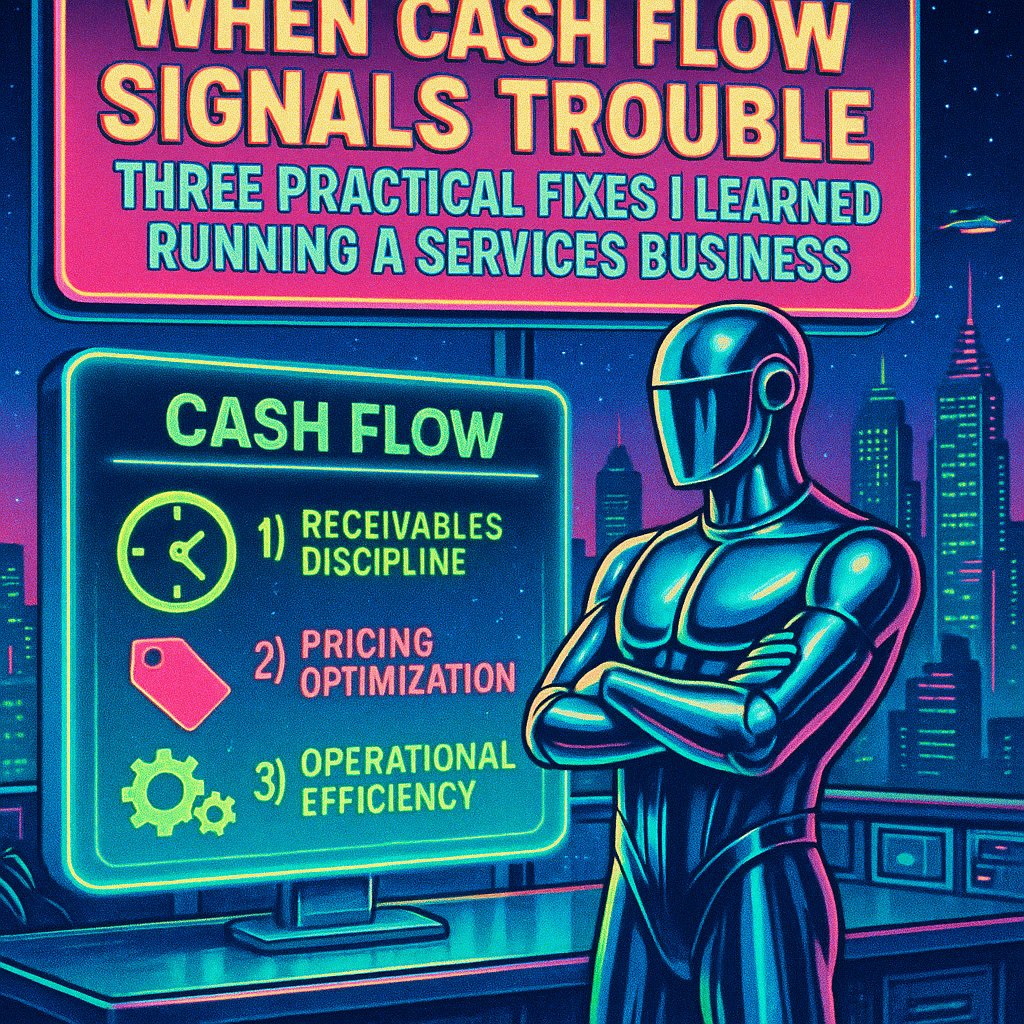
When Cash Flow Signals Trouble: Three Practical Fixes I Learned Running a Services Business
The week the phone stopped ringing, cash flow became more than an accounting metric. It became the conversation I had with myself at 2 a.m. and the problem my team woke up to the next morning. If you advise small firms, those quiet weeks are when your clients need structure more than sympathy.
This article walks through three pragmatic fixes I used to steady a services business when receivables lagged, margins thinned, and confidence wavered. I focus on actions advisors and client services professionals can teach their clients so problems do not become crises.
Frame the problem: read the cash flow signals early
Most owners watch revenue and assume steady sales equal steady cash. They forget timing. Cash flow problems rarely arrive out of nowhere. They follow invoice disputes, a big client stretching terms, or a seasonal dip.
Start by training clients to treat cash flow as a rhythm. Ask them to compare bank balances to aged receivables, payroll dates, and upcoming vendor obligations. A one-week mismatch between expected inflows and payroll can mean a funding shortfall one month later.
Create a simple three-line view for every client: cash on hand, committed outflows in the next 30 days, and receivables due in the same window. That short snapshot reveals true urgency.
Fix 1 — Shorten the runway: practical tweaks to accelerate collections
Acceleration rarely requires new software. It requires small policy shifts that are simple to enforce.
First, clarify payment terms on every proposal and invoice. Ambiguity allows clients to default to the worst possible behavior. Second, move to milestone billing for multi-step work. When a client signs off on a phase, issue an invoice immediately. Third, build predictable reminders into the process. A polite email at seven days past due, then a phone call at 14 days, resets expectations faster than waiting for 30-day notices.
When clients resist prepayment, offer immediate-value alternatives. For example, provide a short deliverable or report upon receipt of an initial payment. That transforms payment from a trust gamble into an exchange of value.
These steps shrink the cash conversion cycle and give owners breathing room to handle other issues.
Fix 2 — Rebuild margins without cutting core capability
When cash tightens, the reflex is to cut price or headcount. Both can damage future revenue. Instead, find ways to protect gross margin by reallocating effort.
Track time on a per-project basis for a month. Identify repetitive tasks that can be standardized into templates or checklists. Standardization reduces billable hours without reducing perceived client value.
Next, tier services. Create a baseline package that covers essentials and a premium tier for hands-on, high-touch work. Many clients will happily accept a lower-priced baseline for routine needs. That approach preserves cash while keeping higher-margin options available.
Finally, negotiate payment-linked deliverables with subcontractors. If a subcontractor is paid in part when your client pays, you reduce your cash exposure.
These operational moves maintain service quality and keep margins healthier than blunt cost cuts.
Fix 3 — Build predictable liquidity: simple contingency planning
Every small business needs a practical liquidity plan, not a panic plan. Contingency planning involves knowing two numbers: the minimum cash buffer you need to operate for 30 days, and the sources available if that buffer dips below threshold.
Encourage clients to list three non-destructive liquidity sources. These can include temporarily deferring discretionary spend, reassigning internal resources, or a short-term invoice financing arrangement. The point is to identify options before pressure mounts.
For advisors, conversations about liquidity open the door to stronger planning and healthier client relationships. Discuss the behavioral elements too. When owners know their options, they make clearer trade-offs and avoid poor decisions made under stress.
Mid-course correction: better client conversations that change outcomes
When I trained account managers, I taught them to move from reporting to coaching. Instead of only delivering aged receivable reports, they asked this question: what will you do if 25% of receivables slip by 30 days? That one question forces a client to prioritize.
Use concrete scenarios. Run a 30-day stress test with clients: what happens if a major invoice is delayed, or a key client pauses work for 60 days? Work backward to the actions that preserve liquidity.
If you want frameworks to guide those conversations, resources on operational leadership often contain practical exercises and scripts advisors can adapt. For direct material on improving short-term working capital management, a useful primer on cash flow offers pragmatic techniques and phrasing to use with owners.
Closing insight: teach owners to see cash flow as a management tool
The most successful owners treat cash flow like a management dashboard, not a last-minute panic item. The three fixes above accelerate collections, protect margins, and create a predictable liquidity cushion. Each one is simple, repeatable, and teachable by advisors.
When you help a client convert worry into routine checks and small, enforceable policies, you remove the drama from decisions. That change creates space for better strategy and steadier growth. When cash behaves predictably, owners focus on opportunities, not survival.
Make cash flow the conversation you have every month. It will keep clients out of emergency mode and make your advisory work far more impactful.